What Makes a Great Dental Clinic in Newtown, Powys?
UABy Dr Usman Ahmed, Principal Dentist
12 Nov 2026
6 min read
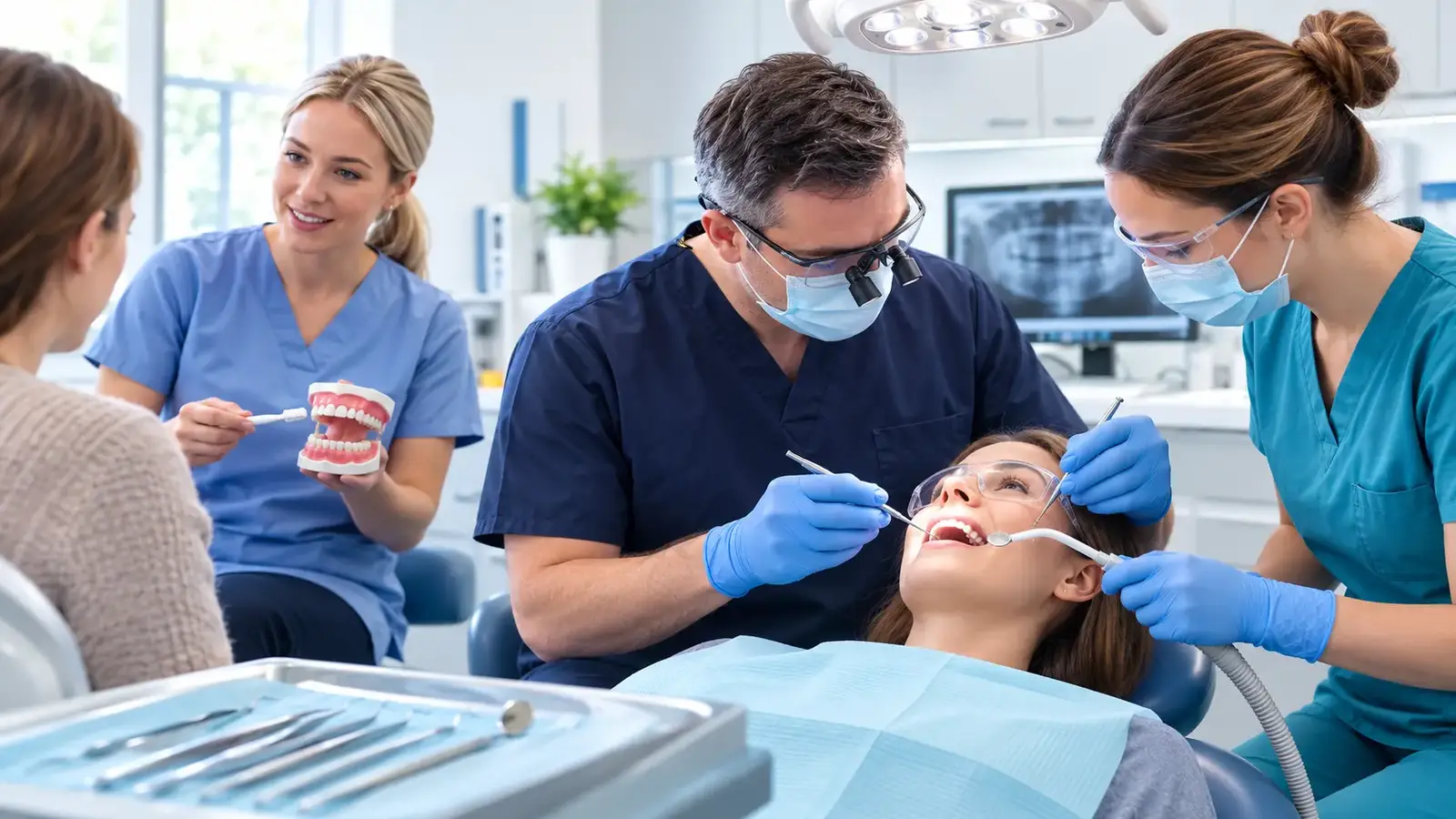
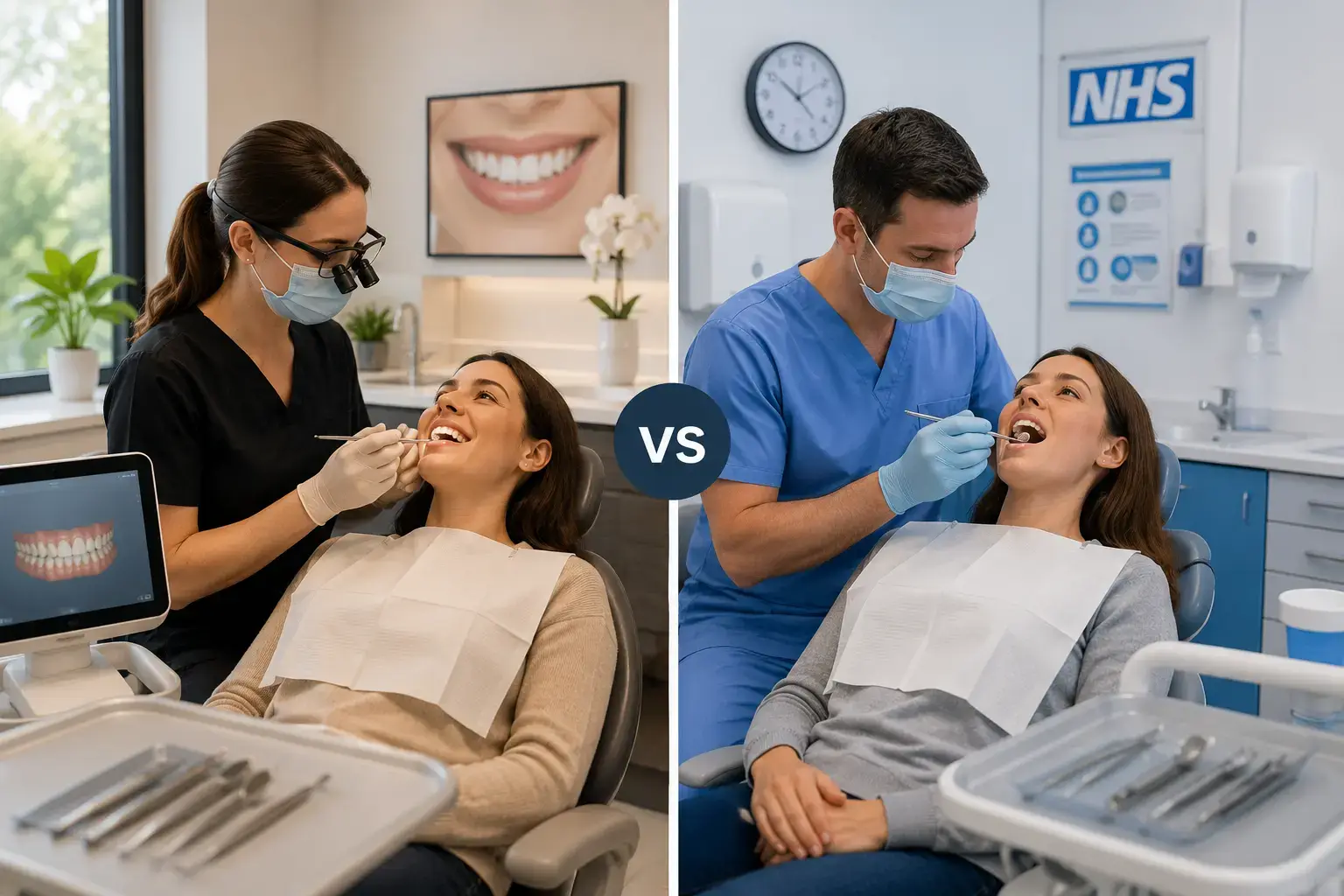
A well-run practice uses its whole clinical team, not just the dentist.
Quick answer: A great dental practice in Newtown, Powys does six things that a merely compliant one does not. It treats prevention as the main job rather than an add-on. It is equipped for the county's ageing population, not just for straightforward adult check-ups. It makes an Active Offer in Welsh even though primary care is exempt from the statutory standards. It uses its full clinical skill mix rather than routing everything through one dentist. It tells you how to complain before you need to. And it can explain why it bought each piece of technology. Regulation sets the floor. These six sit above it.
What to look for in a dental clinic in Newtown, Powys.
Key takeaways
Registration with Healthcare Inspectorate Wales is a legal minimum, not a mark of quality. Every practice offering private care in Wales has it.
Powys has the highest median age of any local authority in Wales at 50 years, and its 65 to 74 population grew 22.5% between the 2011 and 2021 censuses.
Private dental complaints do not go through the NHS route at all. They go to the Dental Complaints Service.
The reformed Welsh dental contract funds prevention directly, so a practice that still runs on drill-and-fill is now behind the system, not just behind the evidence.
First, the floor: what every practice must already do
Every dental practice in Wales providing private care must be registered with Healthcare Inspectorate Wales, and every clinician must be on the General Dental Council register. Practices must meet radiation safety regulations, decontamination standards and give patients written treatment plans with costs. None of that makes a practice good. It makes it legal.
Those baseline checks are worth doing anyway, and we cover exactly how to run them in how to choose the best dentist in Newtown. This article is about what sits above the floor.
Signal 1: Prevention is the main event, not a leaflet
A great practice spends real appointment time on stopping disease, and can tell you what it does about it. Since 1 April 2026 the Welsh dental contract funds care by clinical need rather than paying practices to recall everyone every six months, so prevention is now what the system pays for.
That changes what you should expect at an examination. Look for these:
A recorded risk assessment, not a glance. Your dentist should be scoring your caries and gum disease risk and telling you the result.
A recall interval that follows from that risk. Welsh Government guidance requires recall examinations to follow NICE guidance and be based on your individual level of risk, with the interval recorded and monitored.
Specific advice rather than general advice. Fluoride concentration, interdental brush size, timing around acidic drinks. Being told to brush twice a day is not preventive dentistry.
A hygiene or therapy appointment offered as part of the plan, not sold as an upgrade at the door.
The test is simple. Ask what your risk level is. A practice doing prevention properly will have an answer and a reason.
Signal 3: The Welsh language Active Offer
The Active Offer means providing a service in Welsh without the patient having to ask for it. It sits at the heart of More than just words, the Welsh Government's framework for Welsh language provision in health and social care.
Here is why this is a genuine quality signal rather than a box-tick. The statutory Welsh Language Standards set by the Welsh Language Commissioner came into force for NHS organisations in 2019, but primary care services, which includes dental practices, remain exempt from them. A dental practice in Newtown offering Welsh is therefore doing something it is not legally required to do.
It matters clinically as well as culturally. Consent, pain description and medical history are all harder in a second language, and the Welsh Government's own framework describes receiving care in Welsh as a matter of need rather than preference for many people, particularly when discussing sensitive concerns.
16.4% of Powys residents reported being able to speak Welsh at the 2021 census, down from 18.6% in 2011. The concentration is highest among children: within Powys, the Newtown Central and South ward has the largest number of Welsh speakers aged 3 to 15 of any ward in the county. If you are registering a family, ask the question. See the Welsh Government statement on More than just words for the policy background.
What to look for: bilingual signage and forms, a Welsh option on the phone line, and staff whose language skills are recorded rather than guessed at. A practice that has never thought about it will say so within about four seconds of being asked.
Signal 4: The skill mix is used properly
In a well-run practice, the dentist is not the only person who treats you. Dental therapists can carry out fillings, extractions of baby teeth and preventive work. Hygienists deliver periodontal care. Both can be seen through direct access, without a dentist referral, for the treatments within their scope.
Practices that use their skill mix properly tend to have shorter waits, lower prices for routine work, and dentists whose diaries are free for the complex cases. Practices that route everything through one clinician tend to have the opposite.
Three questions worth asking:
Who will carry out my hygiene appointments, and can I book with them directly?
If I need a straightforward filling, does a therapist do it or does it wait for a dentist appointment?
How many clinicians work here, and how many days a week is each of them in?
That last one matters more in a rural practice than people expect. A practice with one dentist working three days a week has a different capacity for urgent problems than one with three dentists covering the full week.
Signal 6: Technology bought for a reason
Equipment lists are the easiest thing in the world to put on a website and the hardest to judge from the outside. The distinction that matters is whether the practice can explain what a piece of kit changes for you.
Digital intra-oral scanners replace impression trays. The benefit to you is no gagging and a faster, more accurate fit on crowns and aligners.
Intra-oral cameras let you see the crack the dentist is describing. That is a consent tool, not a gadget.
Digital radiography uses a lower radiation dose than film and gives an image immediately.
The pattern to watch for: a practice that leads with the brand name of the machine is selling. One that leads with what it changes for you is treating. Our overview of modern dental technology in Newtown goes through what each type is genuinely useful for. Where cosmetic work is involved, a before and after smile gallery of the practice's own cases tells you more than any equipment list.
Frequently asked questions
What makes a good dental practice in Newtown, Powys?
Regulation sets the minimum, so look above it. A good practice records your disease risk and sets your recall from it, is equipped for an older rural population, uses its therapists and hygienists properly, hands over its complaints procedure without fuss, and can explain what its equipment changes for you.
Are dental practices in Wales required to offer services in Welsh?
No. The statutory Welsh Language Standards came into force for NHS organisations in 2019, but primary care services including dental practices remain exempt. A practice making an Active Offer in Welsh is going beyond what it is legally required to do, which is why it is a useful quality signal.
Does HIW registration mean a dental practice is good?
Registration with Healthcare Inspectorate Wales is a legal requirement for any practice providing private dental care in Wales, and operating without it is a criminal offence. What is useful is the published inspection report and improvement plan, not the fact of registration.
Can I see a dental hygienist without seeing the dentist first?
Usually yes. Dental hygienists and therapists can be seen through direct access for treatments within their scope, without a dentist referral. Practices vary in how they organise this, so ask whether you can book a hygiene appointment directly when you register.
Book a new patient consultation. Clifton Dental Practice, 67 Clifton Terrace, New Road, Newtown, Powys SY16 1BG. Call 01686 626252 or book online. Monday to Friday, 9am to 5pm.
Choosing a Dentist
Newtown, Powys
Preventive Dentistry
Welsh Language
Found this helpful? Share it.
UA
Written by
Dr Usman Ahmed
Principal Dentist & Owner
Dr Usman Ahmed graduated from Queen Mary University of London and leads the team at Clifton Dental. He’s a committed, highly skilled clinician dedicated to gentle, modern dentistry for the whole family.
Whether you’re visiting a dentist for the first time or looking for a practice you can trust, we’re here to help. Schedule your initial consultation in Newtown and take the first step towards a healthier, more confident smile.