Oral Health23 Nov 2026
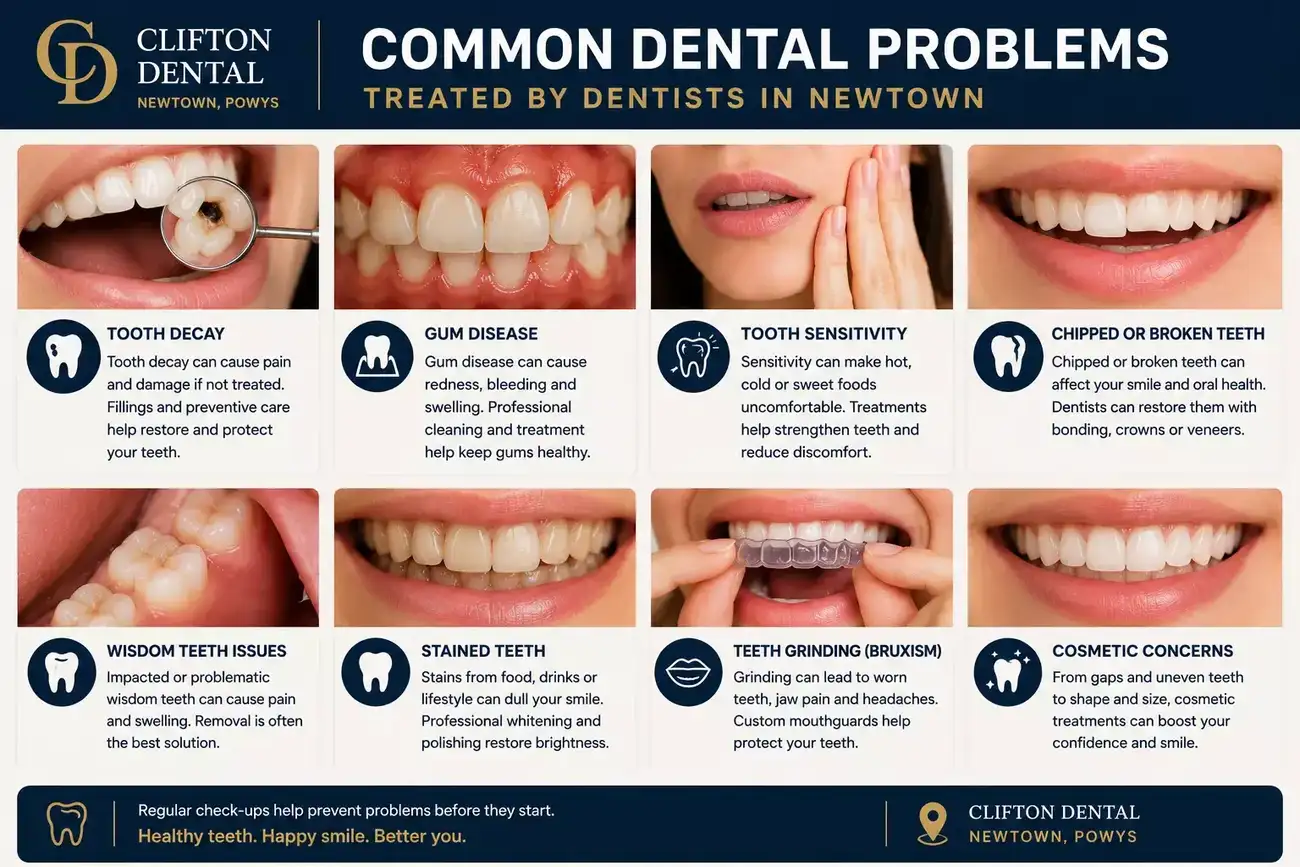
Common Dental Problems Treated by Dentists in Newtown
What each symptom commonly points to and how urgently it needs looking at, from brief sensitivity to facial swelling.
10 min readRead More →
New Patients
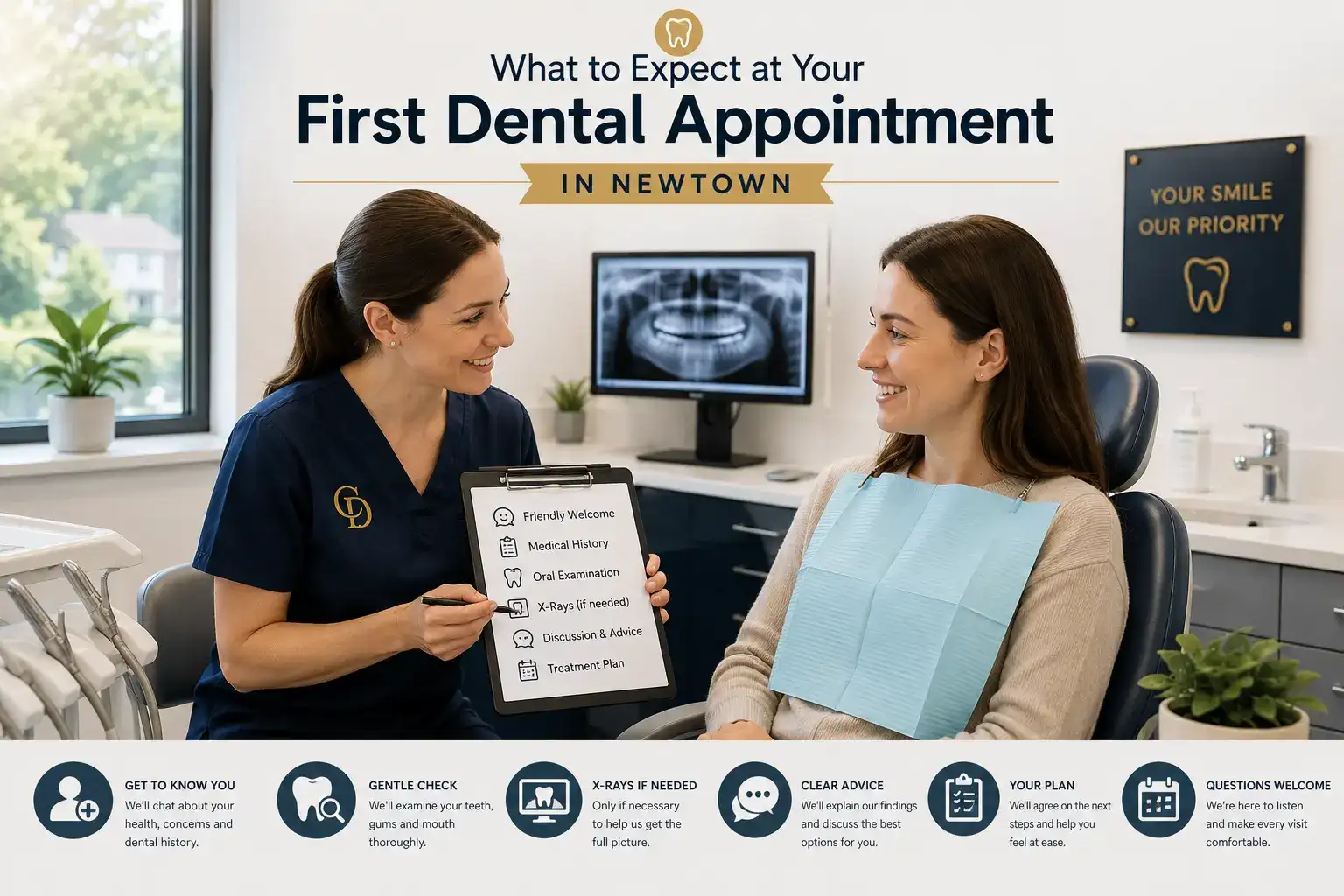
Quick answer: A first dental appointment in Newtown usually runs 30 to 45 minutes and follows the same six stages: medical history, a look at the teeth, a gum screening scored across six sextants of the mouth, a soft tissue check of the head, neck and mouth for early signs of cancer, radiographs if they are clinically justified, then a written treatment plan with costs. Nothing is treated on the day unless you are in pain and you agree to it.
If you have not booked yet, you can arrange your first visit and ask for a longer slot when you call.
Expect 30 to 45 minutes for a new patient examination, against roughly 10 to 20 minutes for a routine recall. The extra time is not padding. The dentist has no history for you, so everything has to be recorded from scratch.
A recall appointment compares your mouth against last time. A first appointment has nothing to compare against, so it becomes the baseline every future visit is measured from. Charting existing fillings, crowns and missing teeth alone takes several minutes.
Treatment. A first dental appointment in Newtown is an assessment, not a treatment session, unless you attend in pain and agree to something being done. If a filling is needed, it is normally planned and booked, which gives you time to read the costs before committing.
If you are in pain, say so when you book rather than turning up and hoping. Practices hold urgent slots and structure them differently. The examination can wait; the abscess cannot.
A first dental appointment in Newtown follows six stages, in this order, at almost every UK practice.
What to take with you is covered separately in our patient checklist before visiting a dentist, and the things worth sorting out beforehand are in things to know before visiting a dentist.
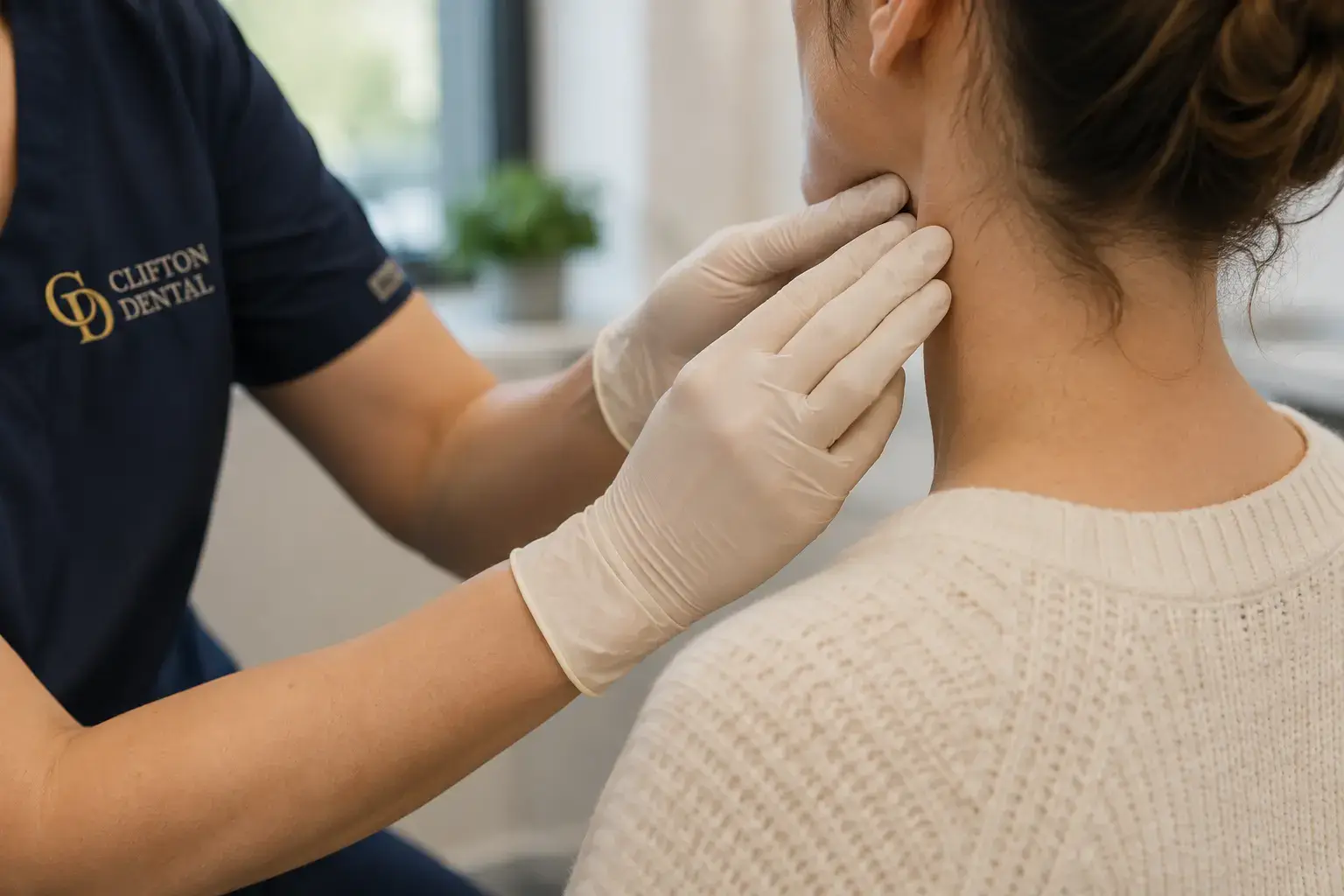
The soft tissue check is a screen for oral cancer, and it is the part of the appointment with the highest stakes and the lowest profile.
Looking at and feeling the lips, tongue including underneath and along the sides, the floor of the mouth, the cheeks, the palate and the throat, then the neck and jaw from the outside.
A dentist who sees you every year is comparing your mouth against a recorded baseline. Someone attending after six years away is being examined without one. Early changes in colour or texture are often painless, which is exactly why they get missed by the person they belong to.
Ask what happens if something needs checking further. The answer you want involves a named referral route and a practice that follows it up rather than posting a letter and hoping.
When Healthcare Inspectorate Wales inspected Clifton Dental Practice on 23 September 2025, inspectors recorded that referrals were made electronically and that staff would follow up any referrals considered urgent, such as suspected oral cancer, to ensure patients were given a timely appointment. That is a regulator describing the process, not a practice describing itself.
X-rays are taken when they are clinically justified for you specifically. There is no rule that a first dental appointment in Newtown, or anywhere else, automatically includes them.
If you have not been seen for years, have existing fillings or crowns, show decay between teeth, or score a 3 or 4 on the gum screening. British Society of Periodontology guidance states radiographs should be available for all code 3 and code 4 sextants, because the bone level cannot be assessed any other way.
If you attend regularly, recent images already exist, and nothing clinical suggests a need. Transferring radiographs from a previous practice can save you being re-exposed unnecessarily, so mention any previous dentist when you book.
Nothing should start until you have a written treatment plan. GDC standards require it to state the proposed treatment, a realistic indication of the cost, and whether each element is NHS or private.
Before you leave, you will be given an interval. NICE guideline CG19 recommends intervals between 3 and 24 months for adults, and no longer than 12 months for under-18s, set from your individual risk and recorded along with whether you agreed. Ask why that interval for you.
You can ask to read the plan at home before committing. A practice working to the standard will hand it over without hesitating, because it was producing one anyway.
At the September 2025 HIW inspection of Clifton Dental Practice, every patient who completed the inspection questionnaire said they were given enough information to understand the risks and benefits of the treatment options, and that costs were made clear before treatment began.
Tell the practice when you book, not when you arrive. It changes what they can do for you.
Be specific rather than general. Not liking the dentist is common; being unable to tolerate the sound of the drill, or having had a bad experience as a child, are things a clinician can actually plan around.
One patient responding to the HIW inspection questionnaire at Clifton Dental Practice described being nervous but soon put at ease. Anxiety is common enough that practices have routines for it, and asking costs you nothing.
Medical history
Discussion
Teeth charting
Gum screening
Soft tissue check
Plan and costs
Once you are registered and the baseline exists, later visits are shorter and follow a different shape. Our dental check-up guide for Newtown residents covers what a routine recall involves.
Booking your first appointment. Ask for a new patient examination rather than a check-up, mention any pain, anxiety or access needs on the call, and ask whether your records can be requested from a previous practice. Arrange your first visit with Clifton Dental Practice on 01686 626252.
Usually 30 to 45 minutes, against roughly 10 to 20 minutes for a routine recall. The extra time exists because the dentist has no previous record for you, so charting your existing fillings, gum scores and soft tissues all has to be done from scratch.
Only if they are clinically justified for you. Radiographs are likely if you have not attended for years, have existing restorations, or score 3 or 4 on the gum screening, because bone levels cannot be assessed otherwise. Ask why a specific radiograph is needed.
Normally no. A first appointment is an assessment, and any treatment needed is planned and booked afterwards so you can read the costs first. The exception is if you attend in pain and agree to something being done on the day.
It is a screen for oral cancer. The dentist examines your lips, tongue, floor of mouth, cheeks, palate and throat, then feels your neck and jaw. The College of General Dentistry states the face, head and neck should be examined during a routine examination.
Say so when you book rather than on arrival. With notice a practice can offer a longer appointment, the first slot of the day, a talk-through visit with no treatment, or an agreed hand signal to stop. Anxiety is a common and routine request.
Three things make a first appointment work: book it as a new patient examination rather than a check-up, take a printed list of your medication, and say on the phone if you are in pain or anxious. Everything else is the practice's job.
If you are still choosing where to register, a first dental appointment in Newtown is also your assessment of the practice, not just theirs of you. Watch whether the findings are explained in words you understand and whether the costs arrive in writing without being chased. To book with a dental practice Newtown Powys patients have used for decades, call 01686 626252 and ask for a new patient consultation.
Book a new patient examination. Clifton Dental Practice, 67 Clifton Terrace, New Road, Newtown, Powys SY16 1BG. Call 01686 626252 or book online. Monday to Friday, 9am to 5pm. Mention any pain, anxiety, access or language needs when you call so the right length of appointment can be arranged.
Written by
Dr Usman Ahmed
Principal Dentist & Owner
Dr Usman Ahmed graduated from Queen Mary University of London and leads the team at Clifton Dental. He’s a committed, highly skilled clinician dedicated to gentle, modern dentistry for the whole family.
Read More About Me →What each symptom commonly points to and how urgently it needs looking at, from brief sensitivity to facial swelling.
Access, cost, Welsh language and safeguarding: the six questions parents in Powys should ask before registering the family with a dental practice.
What each system covers, what it costs after the April 2026 reform, the waiting position in Powys, and why you do not have to pick one forever.
Whether you’re visiting a dentist for the first time or looking for a practice you can trust, we’re here to help. Schedule your initial consultation in Newtown and take the first step towards a healthier, more confident smile.

Get In Touch
Clinic Hours